
The Complete Guide to Nozzle Thread Types: M6, M8, M14 Explained
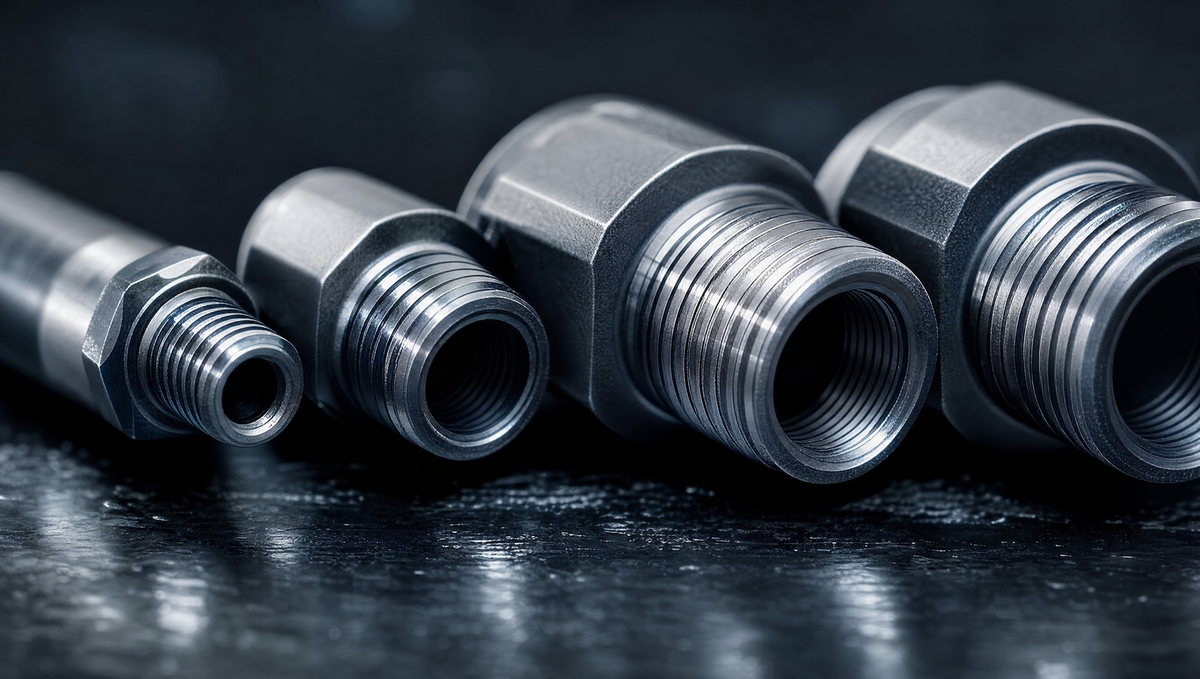
Nozzle threads are one of those details that seems minor until you buy a nozzle that does not fit your hose. Or worse, you cross-thread a connection and damage both the nozzle and hose fitting. Here is everything you need to know about the common thread types used in sewer jetting nozzles.
Why Thread Type Matters
The thread connection between your jetter hose and nozzle must seal under extreme pressure—3,000 to 4,000+ PSI. A poor connection leaks, reducing pressure at the jets. A mismatched thread damages the fitting. A failed connection under pressure is a safety hazard.
Thread type also determines which nozzles are compatible with your hose. Using the wrong thread requires adapters, which add failure points and can restrict flow.
Common Jetter Nozzle Thread Types
M6 (Metric 6mm)
Used with: Small jetter hoses, typically 1/8-inch and some 3/16-inch hose
Common on: Small electric jetters, sink jetters, and compact portable units producing 1-3 GPM
Applications: Small drain cleaning—bathroom sinks, tub drains, and short branch lines under 2 inches in diameter
M6 is the smallest common jetter thread. It is lightweight and appropriate for the lower pressures and flows of compact machines. You will not find M6 on nozzles designed for main line work—the connection is too small for high-flow applications.
M8 (Metric 8mm)
Used with: 1/4-inch and some 3/8-inch jetter hoses
Common on: Mid-range jetters producing 3-8 GPM, popular residential drain cleaning machines
Applications: General residential drain cleaning—kitchen lines, bathroom mains, and smaller main sewer lines up to 4 inches
M8 is the workhorse thread for residential drain cleaning. Most mid-range jetter hoses terminate in M8 fittings, and the majority of residential-grade nozzles use M8 threads. If you are doing standard residential work, most of your nozzle collection will likely be M8.
M14 (Metric 14mm)
Used with: 3/8-inch and 1/2-inch jetter hoses
Common on: High-flow jetters producing 8-18+ GPM, commercial and municipal equipment
Applications: Main sewer lines, commercial drain cleaning, municipal sewer maintenance, large-diameter pipes 4 inches and up
M14 handles the higher flows and pressures of professional commercial equipment. The larger thread provides a stronger connection with more sealing surface area, critical when operating at high PSI with high GPM. If you are doing commercial or municipal work, M14 is your primary thread type.
Other Thread Types
Less common but worth knowing:
- M10 (Metric 10mm): Bridges the gap between M8 and M14. Used on some European equipment and specialty hoses.
- M12 (Metric 12mm): Found on some mid-to-high flow systems, particularly certain European jetter brands.
- NPT (National Pipe Thread): Standard in US plumbing but less common on jetter nozzles. Some American-made jetters use NPT fittings instead of metric.
- BSP (British Standard Pipe): Occasionally found on equipment from UK and Australian manufacturers.
Identifying Your Thread Type
If you are unsure what thread your hose uses:
- Check the hose documentation: The manufacturer spec sheet lists the thread type.
- Measure the thread diameter: Use calipers. M6 measures approximately 6mm, M8 approximately 8mm, M14 approximately 14mm at the major diameter.
- Thread pitch: M6 is typically 1.0mm pitch, M8 is 1.25mm pitch, M14 is 1.5mm pitch. A thread pitch gauge confirms this quickly.
- Try a known nozzle: If you have a nozzle with a known thread, try threading it onto your hose. It should thread smoothly by hand. If it does not, the thread types do not match.
Thread Adapters
Adapters allow you to use nozzles with a different thread than your hose. For example, an M8-to-M14 adapter lets you run an M14 nozzle on an M8 hose. However:
- Adapters add a potential failure point. Every threaded connection is a place where leaks can develop.
- Adapters can restrict flow. The adapter internal diameter may be smaller than the nozzle bore, reducing water delivery.
- Adapters add length. The extra length can matter in tight spaces and affect nozzle navigation in the pipe.
Use adapters when necessary, but prefer nozzles that match your hose thread natively.
Thread Care and Maintenance
- Clean threads before connecting: Debris on threads causes cross-threading and poor seals. Wipe threads clean before every connection.
- Hand-tighten first: Always start the thread by hand to ensure proper engagement before using a wrench. If it does not thread smoothly by hand, stop—you are likely cross-threading.
- Do not over-torque: Tighten snug plus a quarter turn with a wrench. Over-tightening damages threads and makes removal difficult.
- Inspect regularly: Look for damaged, stripped, or corroded threads. Damaged threads leak under pressure and can cause a connection failure at the worst time.
- Use thread sealant when appropriate: Some connections benefit from PTFE tape or liquid thread sealant. Check the nozzle manufacturer recommendation.
Buying Nozzles: Check the Thread First
Before purchasing any nozzle, confirm the thread type matches your hose. It sounds obvious, but buying a nozzle you cannot use without an adapter is a common and frustrating mistake—especially when ordering online.
At Jetter Pro Supply, nozzles are clearly listed by thread type so you can match to your equipment. When in doubt, call and we will help you identify the right thread for your setup.
Shop nozzles at jetterprosupply.com or call (866) 595-0515.
Put it into practice: All Nozzles — Once you know your thread size, browse nozzles that match it here. Questions? Call (864) 804-6637.
Need the right nozzle for the job?
Talk to someone who runs this gear, or shop our full lineup of pro-grade jetting nozzles.