
5 Signs Your Sewer Jetting Inserts Need Replacing (Before You Lose Pressure)
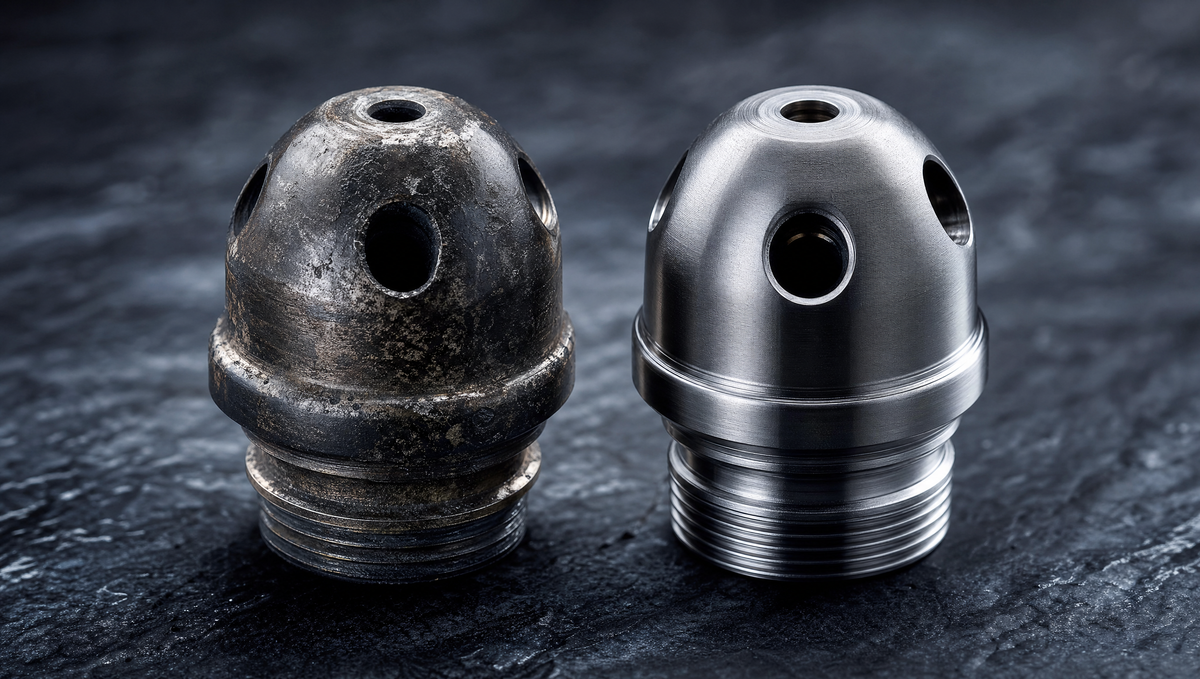
Worn inserts don't announce themselves with a warning light. They degrade gradually — and by the time you notice, you've been running inefficient jobs for weeks. Here are the 5 signs it's time to swap.
1. Your Cleaning Takes Longer Than It Used To
The earliest sign. A job that used to take 30 minutes now takes 45. The insert orifices have worn larger, so you're getting more flow but less pressure. The water hits the pipe wall with less force.
The fix: Compare your current GPM to your rated GPM. If flow has increased more than 10–15%, your inserts are worn.
2. Pressure Gauge Drops at the Same Throttle Setting
Your jetter's pressure gauge is your best diagnostic tool. If you're running at the same throttle position but seeing lower PSI, the orifices have opened up.
Rule of thumb: A 10% pressure drop means inspect. A 20% drop means replace now.
3. The Nozzle Pulls Differently in the Pipe
Fresh inserts create balanced thrust. Worn inserts wear unevenly, creating unbalanced thrust that makes the nozzle pull to one side or chatter. If any orifice looks larger or more oval than the others, replace the full set.
4. You See Visible Wear on the Insert Tip
Pull your inserts and examine them. Steel: Look for an oval-shaped orifice or pitting. Ceramic: Look for chips on the orifice edge. Keep one new insert as a reference — hold it next to a used one and the wear becomes obvious.
5. You're Getting Callbacks
The most expensive sign. If customers are calling back within weeks, your nozzle isn't cleaning properly. A callback costs 2–3 hours of unbilled labor. A full set of inserts runs $33–$90 in steel or $100–$270 in ceramic. Do the math. Browse our replaceable ceramic & steel inserts to keep a fresh set on the truck.
How Often Should You Replace?
- Steel, daily use: Every 40–60 jobs (~2 months)
- Ceramic, daily use: Every 150–250 jobs (~8–12 months)
- Light use: Steel 6+ months, ceramic 2+ years
Don't wait for callbacks. Replacement inserts ship same day — keep a fresh set on the truck so a worn jet never costs you a job.
Put it into practice: Replacement Inserts — When the signs show up, these are the replacement inserts to reach for. Questions? Call (864) 804-6637.
Need the right nozzle for the job?
Talk to someone who runs this gear, or shop our full lineup of pro-grade jetting nozzles.