
What GPM and PSI Do I Need for Residential Drain Cleaning?
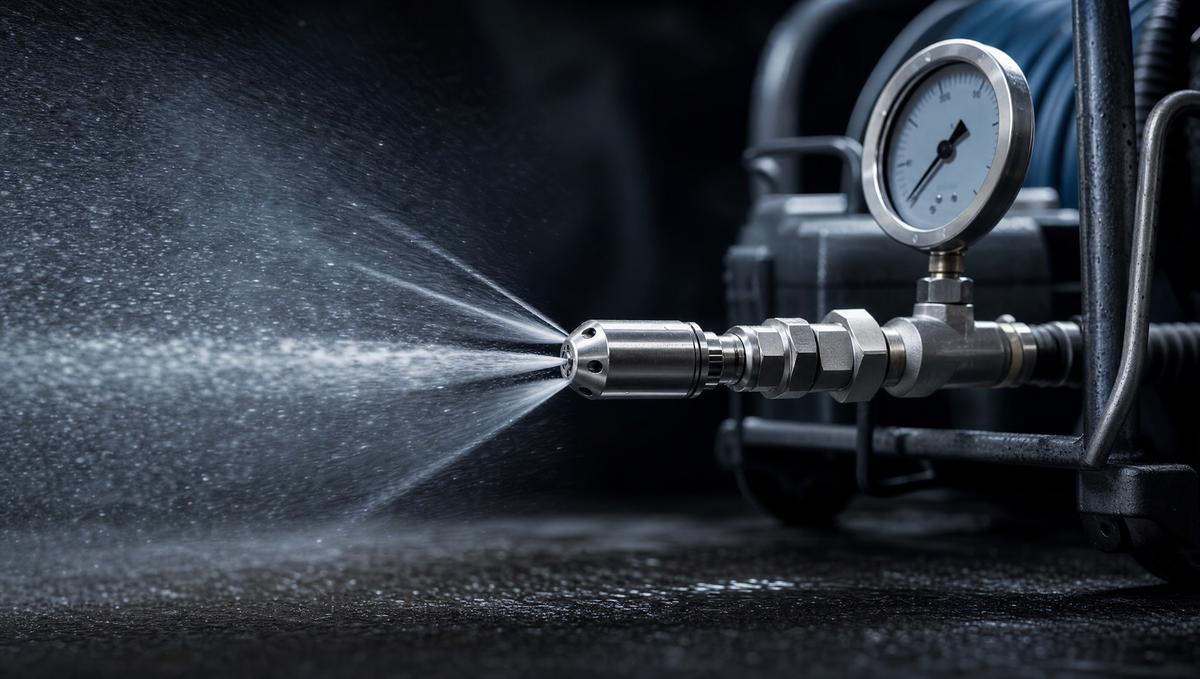
GPM and PSI are the two numbers that define what your jetter can do. Get the balance wrong and you are either underpowered for the job or wasting money on capacity you do not need. Here is a practical guide to matching your machine specs to residential drain cleaning work.
Understanding GPM vs PSI
PSI (Pounds Per Square Inch) is the force of the water. It determines how hard the water hits the obstruction and pipe walls. Higher PSI means more cutting and cleaning power.
GPM (Gallons Per Minute) is the volume of water flowing through the system. GPM is what flushes debris downstream and keeps the nozzle moving through the pipe. Think of PSI as the punch and GPM as the push.
Both matter. A high-PSI, low-GPM setup hits hard but cannot flush effectively. A high-GPM, low-PSI setup moves water but cannot cut through tough blockages.
Residential Drain Sizes and Requirements
Small Drains: 1.5 to 2 Inches
Bathroom sinks, tub drains, and shower drains. These are the smallest lines you will jet.
- Minimum: 1.5 GPM at 1,500 PSI
- Recommended: 2-4 GPM at 2,000-3,000 PSI
Small drains do not need massive power. In fact, too much pressure in a small line can damage pipes or fittings. Use appropriately sized nozzles—a nozzle too large for the pipe cannot navigate bends and will get stuck.
Kitchen Lines: 2 to 3 Inches
Kitchen drain lines carry grease, food particles, and soap buildup. Grease requires more cleaning energy than a simple hair clog.
- Minimum: 3 GPM at 2,500 PSI
- Recommended: 4-8 GPM at 3,000-4,000 PSI
For grease-packed kitchen lines, GPM matters as much as PSI. You need volume to emulsify and flush grease effectively. A grease-specific nozzle with wide-angle rear jets maximizes your cleaning power in these lines.
Main Sewer Lines: 4 to 6 Inches
The primary drain from the house to the municipal sewer or septic tank. This is where most residential jetting jobs happen.
- Minimum: 6 GPM at 3,000 PSI
- Recommended: 8-12 GPM at 3,500-4,000 PSI
Main lines are where underpowered machines struggle. A 4 GPM jetter can technically clean a 4-inch line, but it will take significantly longer and may not fully remove heavy buildup. The extra GPM pays for itself in faster job completion.
The Sweet Spot for Residential Work
If you want one machine that handles the full range of residential drain cleaning, target 8-12 GPM at 3,500-4,000 PSI. This covers everything from 2-inch kitchen lines to 6-inch mains with room to spare.
At this spec range, you can:
- Clear full blockages in main lines
- Strip grease from kitchen lines efficiently
- Cut roots with the right nozzle
- Handle light commercial work (restaurants, small businesses)
Matching Nozzles to Your Machine
Your nozzle must be rated for your machine output. Running a nozzle designed for 4 GPM on a 12 GPM machine wastes water and pressure. Running a 12 GPM nozzle on a 4 GPM machine means the nozzle cannot create proper jet patterns.
When shopping for jetting nozzles, check the GPM and PSI ratings. Match them to your machine specs for optimal performance. Nozzles with replaceable inserts give you the flexibility to swap flow rates as needed.
Common Mistakes
- Buying too small: A 3 GPM jetter for a drain cleaning business is like bringing a pocket knife to a job site. It works for small stuff but limits your capabilities.
- Ignoring GPM: Plumbers often chase PSI numbers. A 4,500 PSI machine at 2 GPM cleans slower than a 3,500 PSI machine at 10 GPM for most drain work.
- Not considering water supply: A 12 GPM jetter needs 12 gallons per minute of supply water. Make sure your tank or water source can keep up.
Bottom Line
For residential drain cleaning, the 8-12 GPM at 3,500-4,000 PSI range handles virtually everything you will encounter. Pair that machine with properly matched professional nozzles and you have a setup that cleans effectively and efficiently on every call.
Shop nozzles at jetterprosupply.com or call (866) 595-0515.
Put it into practice: Residential Mainline Nozzles — For residential drain cleaning, these mainline nozzles match typical home GPM and line sizes. Questions? Call (864) 804-6637.
Need the right nozzle for the job?
Talk to someone who runs this gear, or shop our full lineup of pro-grade jetting nozzles.