
Bathroom Drain Jetting: Navigating Tight Bends Without Getting Stuck
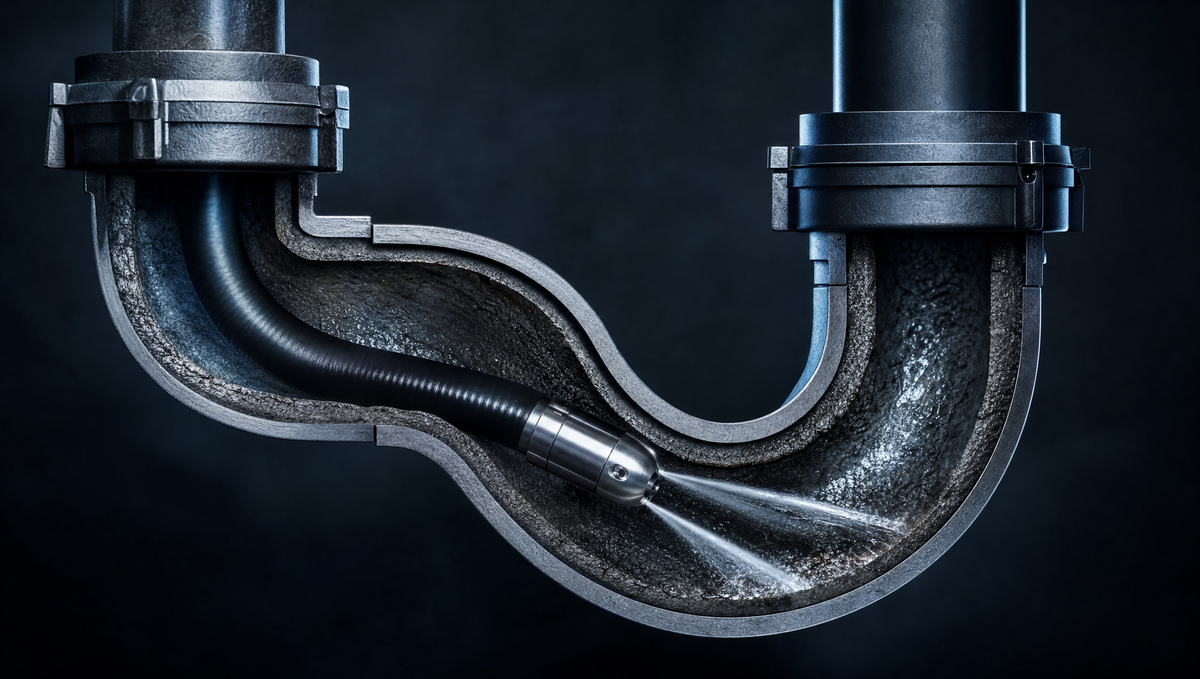
Every plumber has been there: a clogged bathtub or shower drain, a homeowner hovering in the doorway, and a drain line full of tight bends that seem designed to trap your hose. Bathroom drains are some of the trickiest lines to jet because of their small diameter, sharp turns, and limited access points.
But with the right nozzle and proper technique, bathroom drain jetting becomes a fast, profitable service instead of a frustrating wrestling match.
Why Bathroom Drains Are Different
Unlike sewer mains that run in relatively straight lines with gentle bends, bathroom drains are engineered with tight geometry:
- Small diameter: Most bathroom drains are 1.5" to 2" -- barely larger than your jetting hose
- P-traps: Every fixture has a P-trap with a sharp U-bend that your hose must navigate
- Multiple direction changes: From the drain to the trap to the branch line, the hose may need to make 3-4 turns in just a few feet
- Fragile materials: Older homes may have brass, copper, or thin-wall PVC that cannot handle aggressive jetting pressure
- Limited access: You are often working through a small drain opening with no cleanout nearby
These challenges mean you cannot use the same nozzles and techniques that work on a 4" sewer main. You need specialized equipment and a lighter touch.
The Right Nozzle: Flipper and Button Styles
For bathroom drains, you want nozzles specifically designed for small-diameter, high-bend lines:
Flipper Nozzles
A flipper nozzle is purpose-built for navigating tight bends. It has a flexible or articulating head that "flips" around corners instead of jamming against them. Key features:
- Compact profile fits through 1.5" lines
- Flexible design follows the pipe around turns
- Forward and rear jets for both penetration and cleaning
- Reduced risk of getting stuck at bends
Button Nozzles
Button nozzles are small, rounded, and designed to slide through tight spaces. They are less aggressive than standard flusher nozzles, which is actually an advantage in small, fragile bathroom lines.
- Smooth, compact shape glides through P-traps
- Gentle enough for older pipe materials
- Effective on hair, soap scum, and biofilm -- the typical bathroom clog materials
Both styles are available with Tier 3 ceramic inserts at Jetter Pro Supply, giving you the durability and precision orifice performance that keeps these small nozzles working accurately job after job.
Technique: Getting Through the Bends
Proper technique is the difference between a 20-minute job and an hour-long headache. Follow these steps:
1. Use 1/4" Hose Only
This is non-negotiable for bathroom drains. 1/4" hose has the flexibility to navigate tight bends that 3/8" or 1/2" simply cannot handle. The smaller diameter also leaves room in the pipe for water to flow back past the hose, which is critical for flushing debris out.
2. Go Slow at Every Bend
When your hose hits a turn, slow down. Let the water pressure push the nozzle around the bend naturally. Forcing the hose causes it to fold over and jam. If you feel resistance:
- Pull back 6 inches
- Apply steady, gentle forward pressure
- Let the rear jets propel the nozzle around the corner
- If it still will not go, pull back further and try a pulsing approach -- short bursts of forward movement
3. Manage Your Pressure
Full pressure is not always better. In 1.5" bathroom drains, start at reduced pressure (50-70% of your jetter capacity). This gives you:
- Better nozzle control through bends
- Less risk of pipe damage in older plumbing
- More controlled debris removal
Increase pressure only when you have a clear, straight section and need more cleaning power.
4. Pull Back Slowly for the Best Clean
The real cleaning happens on the pull-back, not the push-in. Once you have reached the blockage or the end of the run:
- Pull back slowly -- 6-12 inches per second
- The rear jets scour the pipe walls as you retract
- Make 2-3 passes for thorough cleaning
- Keep water running to flush debris downstream
5. Protect the Fixture
Bathroom jetting splashes. Always:
- Cover the drain opening with a wet rag around the hose to contain splashback
- Protect the tub or shower surface from the hose dragging across it
- Have towels ready -- the homeowner is watching
Common Bathroom Drain Problems and Solutions
- Hair clogs: The most common. Flipper nozzles cut through hair tangles effectively. Multiple passes may be needed for dense accumulations.
- Soap scum buildup: Creates a hard, layite coating on pipe walls. Rear-jet cleaning nozzles with good wall-washing action work best. May require hot water pre-treatment.
- Biofilm/black sludge: Common in slow drains. Regular jetting clears it completely. Great upsell for maintenance contracts.
Pricing Bathroom Drain Work
- Single fixture (tub or shower): $250-$350
- Multiple fixtures (whole bathroom): $350-$500
- Whole-house drain maintenance: $400-$600
At 20-45 minutes per fixture, bathroom drain jetting is highly profitable when you have the right nozzles and technique.
Get Set Up for Bathroom Drains
Do not lose another hour fighting P-traps with the wrong equipment. The right flipper nozzle with ceramic inserts from Jetter Pro Supply makes bathroom drains fast and profitable.
Shop small-line and flipper nozzles at Jetter Pro Supply -- same-day shipping on inserts, free shipping over $199.
Put it into practice: Lateral & Tight-Line Nozzles — Tight bathroom bends call for tight-line and lateral nozzles that navigate cleanly. Questions? Call (864) 804-6637.
Need the right nozzle for the job?
Talk to someone who runs this gear, or shop our full lineup of pro-grade jetting nozzles.