
Why Your Jetter Nozzle Keeps Getting Stuck (And How to Fix It)
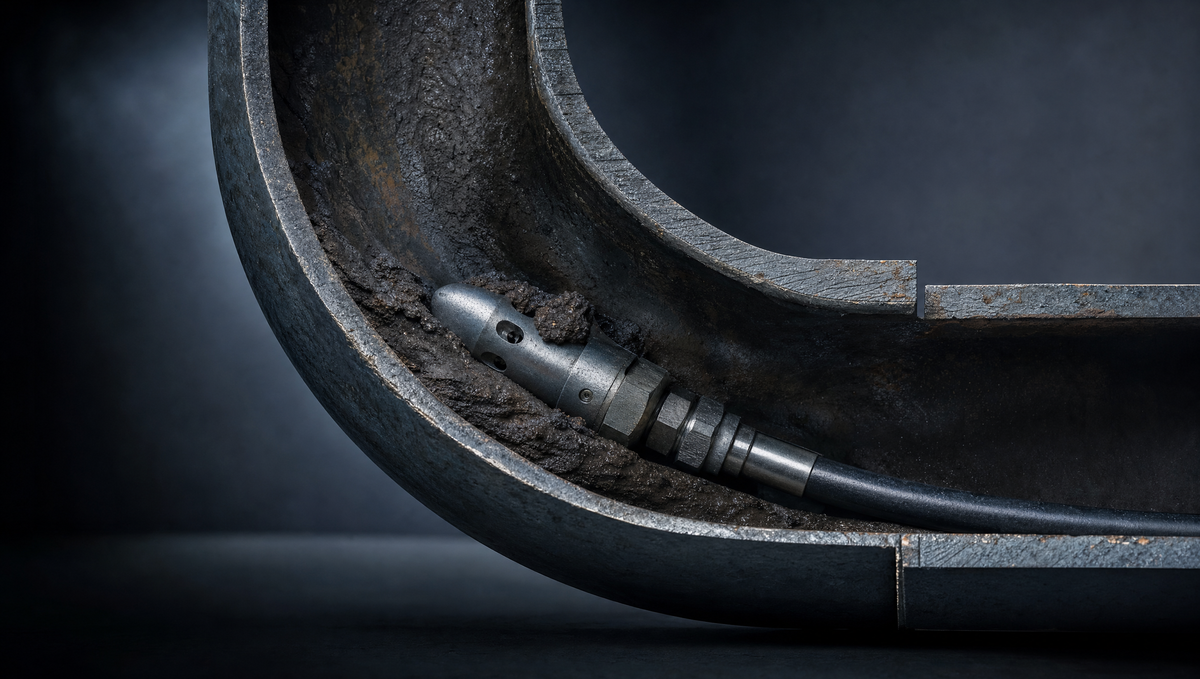
Few things are more frustrating than a jetter nozzle stuck in a pipe. You are on the clock, the customer is watching, and your hose will not come back. Understanding why nozzles get stuck—and how to prevent and recover from it—saves you time, money, and embarrassment.
Common Causes of Stuck Nozzles
1. Oversized Nozzle for the Pipe
This is the number one cause. A nozzle that is too large for the pipe diameter cannot navigate bends. It wedges into turns and catches on joints. The rule of thumb: your nozzle diameter should be no more than 60-70% of the pipe interior diameter. In a 4-inch pipe, your nozzle should be under 2.8 inches. In a 2-inch pipe, under 1.4 inches.
2. Offset Joints and Pipe Damage
Older clay and cast iron pipes develop offset joints where sections shift. The nozzle catches on the lip of the offset. Similarly, intruding roots, collapsed sections, or broken pipe create snag points that grab the nozzle.
3. Sharp Bends
Some pipe configurations have sharp 90-degree bends instead of sweeping turns. Standard nozzles struggle with sharp bends, especially larger ones. The nozzle nose hits the bend wall and the rear body catches on the opposite side.
4. Debris Accumulation Behind the Nozzle
As you jet, debris flows back toward the cleanout. If the debris accumulates around the hose behind the nozzle, it can pack tightly enough to prevent retrieval. This is more common in partially collapsed lines or lines with bellies.
5. Hose Wrap and Kinking
In larger pipes, the hose can loop and wrap around the nozzle during operation. When you pull back, the hose tightens on itself and locks up. Keeping consistent tension during operation prevents this.
Preventing Stuck Nozzles
Camera First
A pre-inspection camera run shows you pipe diameter, bend severity, joint condition, and obstructions before your nozzle ever enters the pipe. This is the single most effective prevention measure. If you see offset joints or tight bends, downsize your nozzle accordingly.
Size Down When In Doubt
A slightly undersized nozzle that navigates the entire pipe and cleans effectively is better than an oversized one that gets stuck at the first bend. You can always make a second pass with a larger nozzle if needed.
Use Rounded Nozzle Profiles
Nozzles with rounded or tapered bodies navigate bends and offsets better than flat-front or angular designs. Egg-shaped and bullet-profile nozzles slide through transitions that snag blunt-nosed designs.
Maintain Hose Tension
Keep slight backward tension on the hose as the nozzle advances. This prevents slack from building up in the pipe, which causes wrapping and kinking. The nozzle still advances—the rear jets pull it forward against your tension—but the hose stays organized.
Go Slow Through Bends
Feel the hose as it approaches and navigates bends. Slow your feed rate and let the water work the nozzle around the turn. Forcing through bends is what gets nozzles wedged.
How to Free a Stuck Nozzle
Method 1: Water On, Pull Gently
Keep the water running and apply steady, gentle backward pressure on the hose. The rear jets create lubrication and may shift the nozzle enough to free it. Do not yank—you will break the hose or the fitting.
Method 2: Push Forward, Then Pull Back
Sometimes the nozzle is caught on a lip or offset. Pushing it slightly forward past the snag point, then pulling back at a different angle, frees it. Feed a foot of hose in, then retrieve.
Method 3: Reduce Pressure
If the nozzle is wedged in a bend, the rear jets pushing it forward are working against you. Reduce pressure to minimum, then pull gently. Without jet thrust pushing the nozzle deeper into the snag, it may release more easily.
Method 4: Rotate the Hose
Gently rotate the hose while pulling back. This changes the nozzle orientation relative to the snag point and can work it free. Combine with low pressure and steady backward tension.
Method 5: Access From the Other End
If nothing else works and there is a downstream cleanout, access from there and push the nozzle back toward you. Or use a snake to reach the nozzle and dislodge it.
When to Cut Your Losses
In rare cases, a nozzle is truly stuck. The pipe may be collapsed around it or the joint offset is too severe. At that point, you are looking at excavation to reach the stuck point. This is an expensive lesson that reinforces the value of camera inspection before jetting.
Always have spare nozzles on your truck. Losing a nozzle in a pipe happens rarely if you follow prevention steps, but when it does, you still need to finish the job.
Invest in the Right Nozzle Design
Quality nozzles with proper profiles navigate pipes better than cheap alternatives with crude shapes and poor tolerances. A well-designed nozzle body with smooth transitions and appropriate sizing for your typical pipe diameters prevents most stuck-nozzle situations before they start.
Shop nozzles at jetterprosupply.com or call (866) 595-0515.
Put it into practice: All Nozzles — Choosing a nozzle built for your line size is the simplest way to avoid getting stuck. Questions? Call (864) 804-6637.
Need the right nozzle for the job?
Talk to someone who runs this gear, or shop our full lineup of pro-grade jetting nozzles.