
Steel vs. Ceramic Sewer Jetting Inserts: Which One Saves You More Money?
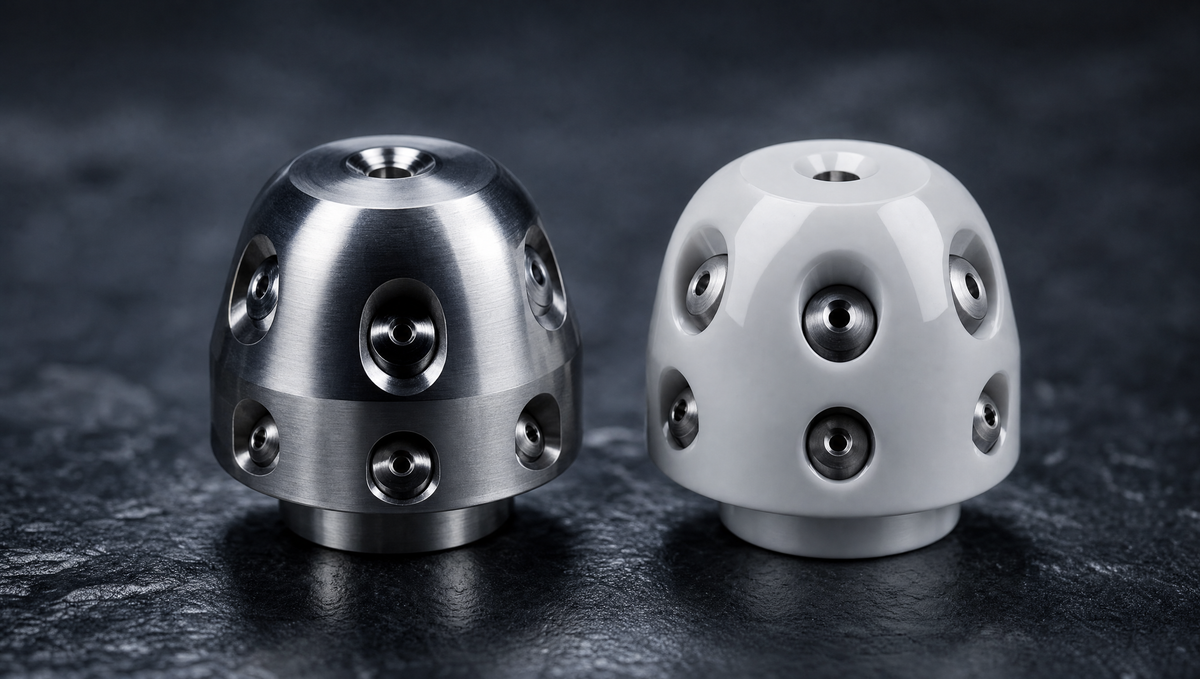
If you're a plumber running a jetter daily, insert choice is one of the biggest factors in your operating costs. Steel inserts are cheaper upfront, but ceramic inserts last 3–5x longer. So which one actually saves you money?
The Math on Steel Inserts
A steel M6 rear jet insert costs $11.16. On a typical residential jetting job, you're pushing 2,000–4,000 PSI through those inserts for 30–60 minutes. At that rate, steel inserts last roughly 40–60 jobs before the orifice wears out of spec and your flow drops.
That means you're replacing a full set of 8 rear inserts every 2 months (the KEG Cleaning Nozzle 1/2″ runs 8 M6 inserts) if you're jetting daily. At $11.16 each, that's $89.28 every 2 months, or about $536 per year just on rear jet inserts.
The Math on Ceramic Inserts
A ceramic M6 rear jet insert costs $33.46 — three times the price of steel. But ceramic inserts last 150–250 jobs. That same plumber jetting daily replaces ceramic inserts every 8–12 months.
Annual cost: $267.68 (one full set per year). That's roughly a $270 savings per year over steel, and you're swapping inserts a fraction as often.
The Hidden Cost: Downtime
Every time you swap inserts, you're not jetting. Steel means 5–6 swap sessions per year. Ceramic means 1–2. Factor in drive time to pick up replacements and the math gets even worse for steel.
When Steel Makes Sense
- You're a weekend warrior doing 2–3 jobs per month — steel will last you 6+ months
- You're working in extremely abrasive conditions where even ceramic wears fast
- You want a lower upfront investment while you're building your jetting business
The Bottom Line
For daily-use plumbers, ceramic inserts pay for themselves within 4 months. After that, every job is money in your pocket compared to steel. And replacement inserts ship same day, so restocking never slows you down.
Pro tip: Start with ceramic rear jets (they see the most wear) and keep steel front jets as a backup. That hybrid approach gives you the best cost-to-performance ratio. Shop ceramic & steel replacement inserts or browse the full Victory Line nozzle range.
Put it into practice: Replacement Inserts — The steel-vs-ceramic decision is really about which insert you install. For the cost side, read Cheap vs Pro: The Real Math. Questions? Call (864) 804-6637.
Need the right nozzle for the job?
Talk to someone who runs this gear, or shop our full lineup of pro-grade jetting nozzles.