1-Inch KEG OMG Nozzle for Deteriorated Sewer Pipe

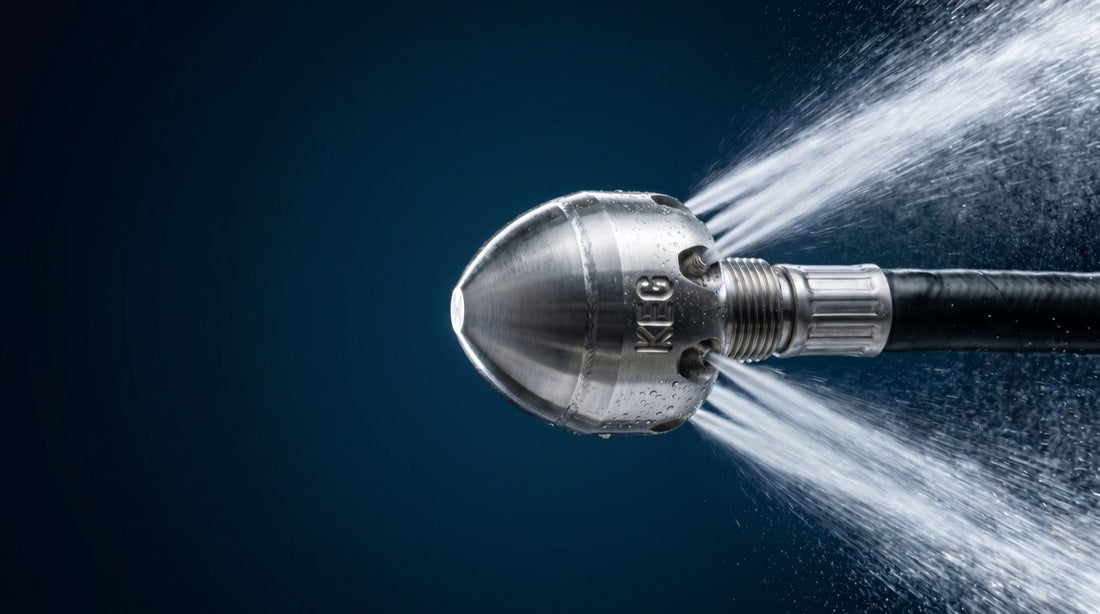
Manufacturer model reference image. Confirm the actual demo/used unit and included components when requesting a quote.
Deteriorated sewer pipe changes the nozzle-selection question. The crew needs to move through the line and clear material while accounting for holes, missing sections and the remaining pipe wall. The 1-inch KEG OMG is designed around that kind of work: penetrating, flushing and pulling in sanitary and storm lines, including concrete and corrugated-metal pipe.
Its long body and narrow rear-jet pattern explain its role. Here, “1 inch” describes the hose connection. The OMG model covered here is intended for pipe 12 inches and larger, so connection size and working pipe diameter need separate checks.
How the OMG creates its pulling force
The OMG uses twelve fixed rear jets at 8 and 12 degrees. KEG describes these narrow angles as producing high thrust while minimizing force against the pipe wall. That pattern supports forward travel and pulling work while the water flushes material through the line.
The body length has a separate purpose: KEG describes the nozzle spanning holes in deteriorated pipe. This is useful context when comparing it with a more compact general-cleaning nozzle. Pipe condition still governs the job plan; a long body cannot establish that a damaged line is structurally sound.
The catalog also lists an optional forward jet and a pulling-eye option. Confirm which features are actually fitted to the unit being quoted and whether the pulling eye is supplied separately.
Where this design belongs in the job
The OMG's listed applications include deteriorated and no-bottom pipe. It can also clear a path for other nozzles. That makes it worth discussing when access through a damaged larger line, debris movement and pulling ability are the immediate priorities.
Define the intended result before choosing the setup. Opening a route for a following tool and completing the final cleaning are different stages of a job. Tell JPS what is obstructing the line, what the camera inspection shows and what equipment you expect to send through next.
For concrete pipe, the material description refers to the pipe being cleaned. A job involving concrete that must be removed from inside the line needs its own cutter review. The Super Cutter Plus 200 is a separate model whose catalog applications expressly include concrete removal.
Check the machine and complete assembly
The reviewed OMG model table does not state a model-specific GPM or PSI range. A 1-inch connection alone therefore gives too little information to approve the nozzle for a particular truck or trailer.
- Supply machine flow in US GPM and working pressure in PSI.
- Identify hose inside diameter, hose length and the hose-end connection.
- Describe pipe diameter, material, access restrictions and known damage.
- Identify the obstruction and the intended penetrating, flushing or pulling task.
The OMG uses replaceable titanium ceramic inserts. The installed inserts and any forward-jet arrangement need to match the proposed machine and application; a model name does not establish the jetting of a particular used unit.
Questions to ask about a demo/used OMG
Ask for current photos of the actual unit, a description of its condition and an itemized account of what comes with it. Review the body, inserts, connection and any optional pulling equipment. A manufacturer image illustrates the model, while the quote should identify the equipment you would receive.
Confirm the actual selling price, available unit, dispatch timing and applicable warranty or return terms. Keep those commercial details separate from the catalog's design specifications.
Common questions
Does the OMG rotate?
The OMG's rear jets are fixed. Its design centers on thrust, penetration and flushing. For a cutting application, identify the obstruction and compare the relevant rotating or chain-cutting equipment with JPS.
Does “for deteriorated pipe” mean it cannot damage a line?
KEG's low-wall-force and hole-spanning design claims describe how the nozzle works. Actual suitability depends on the remaining structure, access and operating setup. Review the pipe condition before selecting the tool.
Discuss your large-pipe job with JPS
View the 1-inch KEG OMG demo/used listing and request a quote. Include the machine and line details above so JPS can confirm the unit, installed setup and included equipment.
Related KEG equipment guides
- KEG 1-Inch Six-Jet Floor Cleaner for Heavy Bottom Debris
- KEG 1-Inch Cleaning vs. Traction: Which Nozzle Fits the Job?
Technical reference: KEG SBK-F26 catalog, printed pages 18. Model specifications describe the design; the quote confirms the supplied configuration.
Put this guide to work on your truck
Choose the connection and job that match your equipment. Get help with the exact configuration before ordering.