KEG 1-Inch Cleaning vs. Traction: Which Nozzle Fits the Job?
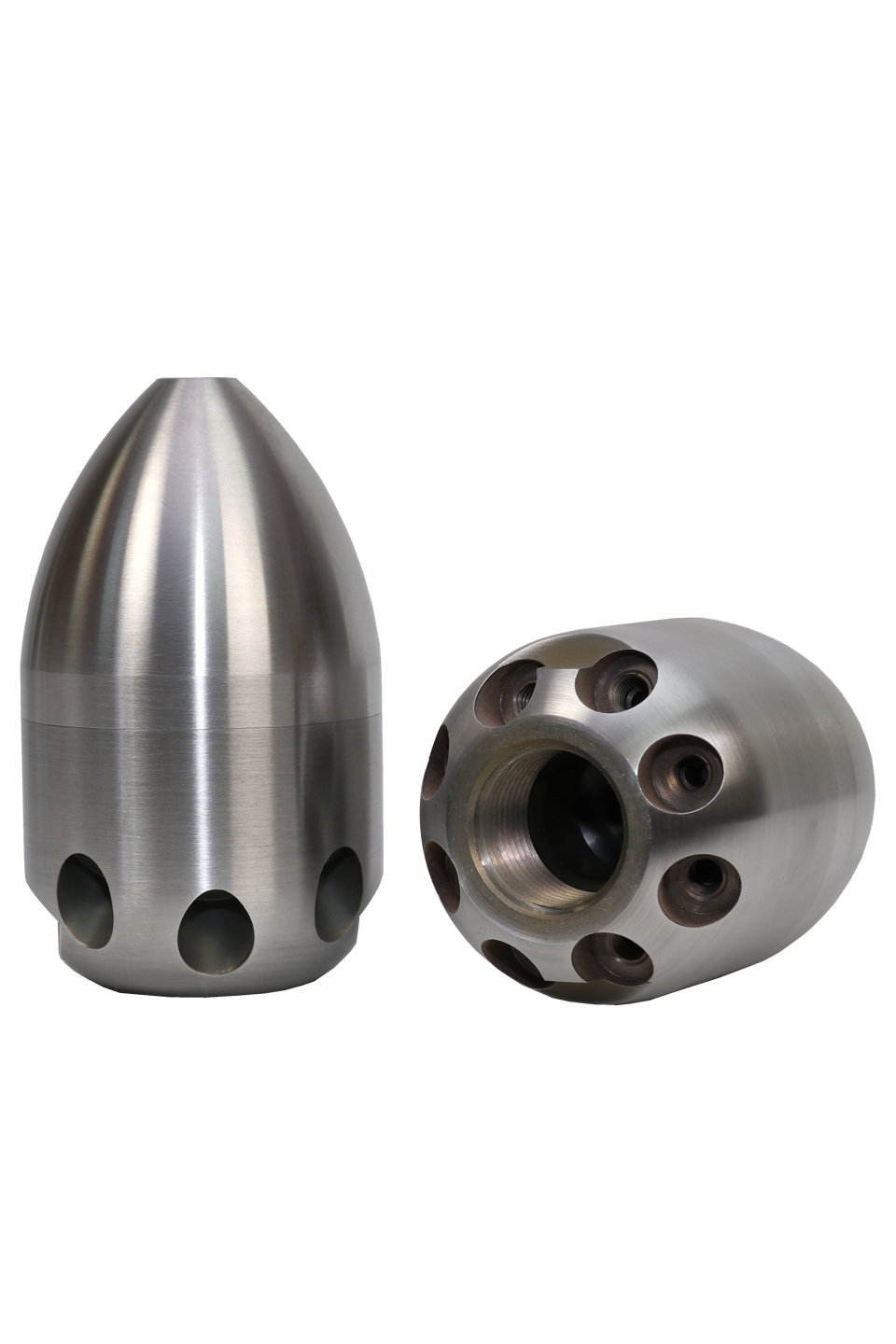
Manufacturer model reference image. Confirm the actual demo/used unit and included components when requesting a quote.
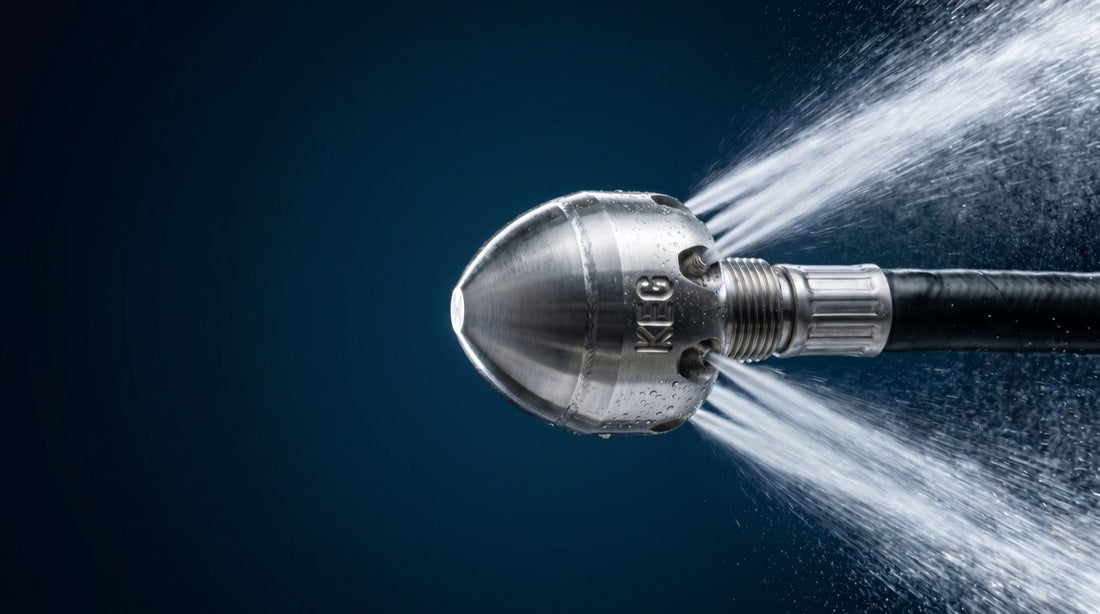
Two nozzles can share a 1-inch connection and still serve different purposes. The standard KEG Cleaning Nozzle, part 0010 0003, and Traction Nozzle, part 0010 0015, are a useful example. Both use rear jets, but their patterns, weights and pipe ranges differ. Choosing between them starts with a simple distinction: does the job call primarily for broader wall cleaning, or for directed cleaning and pull to help open a path?
The standard Cleaning Nozzle
The 1-inch Cleaning Nozzle has eight rear jets at 15 and 25 degrees, uses M8 inserts and weighs 6.6 pounds in the catalog. Its stated pipe range is 4–16 inches. KEG positions it for everyday general cleaning and high wall force in sanitary and storm applications.
The wider rear pattern helps explain that role. When the task is cleaning along the pipe rather than focusing only on getting a hose through a restriction, the direction of the jets is a meaningful selection detail. It is not a promise that the nozzle removes every deposit or that machine configuration can be ignored.
The Traction Nozzle
The 1-inch Traction Nozzle has six rear jets at 8 and 12 degrees, M8 inserts and a listed weight of 3.5 pounds. Its pipe range is 4–12 inches. An optional forward penetrator is described for the model; confirm whether the unit being quoted actually has that configuration.
The narrower rear pattern emphasizes propulsion and directed cleaning. KEG describes mud and sand removal and clearing a path for another nozzle among its uses. The catalog also describes it as gentler on deteriorated pipe. That comparison is not a guarantee of damage-free operation: pipe condition and suitability still need review.
Three questions that make the comparison useful
1. What is the next job in the line?
If the objective is everyday wall cleaning, start the conversation with the Cleaning Nozzle. If the immediate objective is pull and path opening through mud or sand, discuss the Traction Nozzle. These are starting points based on the designs, not instructions to use either nozzle regardless of the obstruction.
2. What pipe are you working in?
The shared 1-inch connection does not mean they clean 1-inch pipe. Compare the actual pipe against each model's range, and consider its condition, access and restrictions. A 14-inch line falls within the Cleaning Nozzle's stated range but outside the Traction model's stated 4–12-inch range. That is a reason to review the selection, not overlook the difference because the hose connects.
3. What configuration is installed?
Both models have steel or ceramic insert configurations. Confirm the installed material and setup on the exact unit, along with any forward-jet option. A nozzle previously configured for another truck should not be assumed to match yours.
Keep these models separate from similarly named tools
This comparison concerns standard Cleaning part 0010 0003, not the wide-angle Cleaning model 0010 1103. The wide-angle product, Toilet Tamer and aluminum versions have their own specifications. Ask for the exact part number so the quoted tool matches the pattern and pipe range discussed here.
Part numbers help prevent a useful comparison from becoming misleading. Include them in a quote request, especially when a used nozzle's appearance or shortened name leaves its identity unclear.
Match the machine, then confirm the used unit
Send JPS your machine GPM, working PSI, hose inside diameter, hose length, hose-end connection, pipe diameter and task. Those details let JPS review the installed inserts and working setup for the nozzle you are considering.
For demo or used equipment, ask for current photos, body and thread condition, installed inserts, included parts, availability and pricing. Model specifications are not a record of a particular unit's condition. Confirm dispatch arrangements separately rather than treating a catalog capability as a stock or shipping promise.
Compare the 1-inch KEG Cleaning Nozzle and 1-inch KEG Traction Nozzle, then describe the job to JPS. The most useful choice is the one matched to the task, pipe and available machine.
Related KEG equipment guides
- KEG Torpedo 1-Inch Nozzle for Everyday Sewer Cleaning
- KEG Triple Edge Quattro 1-Inch: Opening a Path Through a Blockage
Technical reference: KEG SBK-F26 catalog, printed pages 8–9. Model specifications describe the design; the quote confirms the supplied configuration.
Put this guide to work on your truck
Choose the connection and job that match your equipment. Get help with the exact configuration before ordering.