KEG Torpedo 1-Inch Nozzle for Everyday Sewer Cleaning

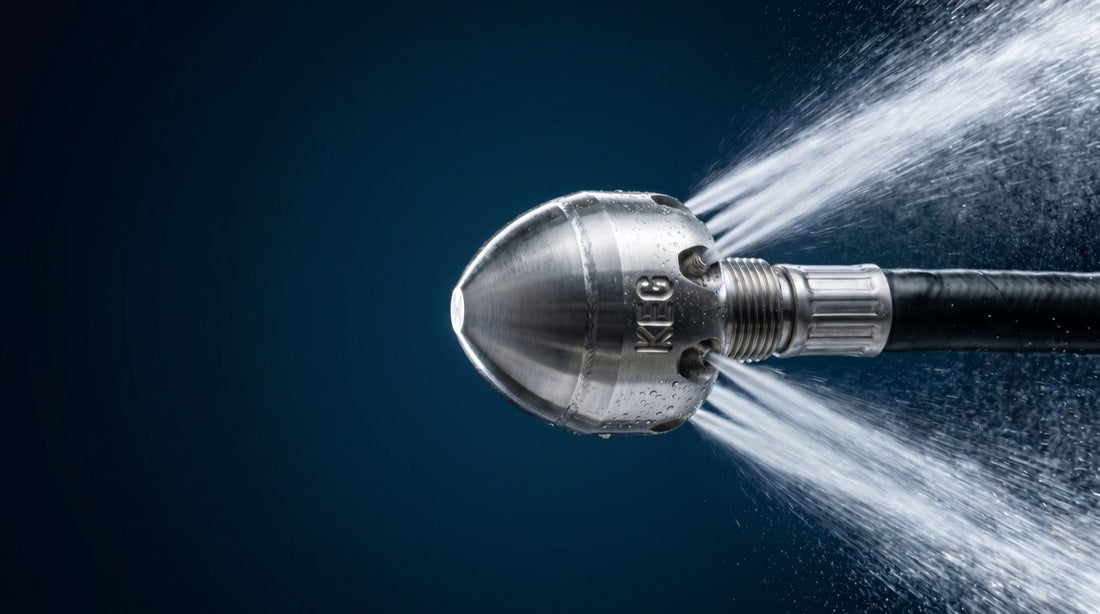
Manufacturer model reference image. Confirm the actual demo/used unit and included components when requesting a quote.
The 1-inch KEG Torpedo, part 0010 0031, is an everyday cleaning nozzle for sanitary and storm lines, including heavy-debris work. Its two-angle rear-jet pattern and weighted body make it a useful model to consider for a crew regularly cleaning 6–16-inch pipe. Understanding those features helps you match the nozzle to the lines on your schedule.
Eight jets and a body designed to track the bottom
The Torpedo uses eight rear jets at 12 and 18 degrees. It has a shaped, 14-pound body intended to support stable tracking near the pipe bottom. The design combines rearward cleaning flow and propulsion in a compact tool for routine line-cleaning work.
The two rear angles work together as one cleaning pattern. The shaped body helps the nozzle track along the bottom while its jets direct water rearward. For routine cleaning, that combination brings propulsion and debris-cleaning action into the same tool. Match the installed inserts to your machine so the pattern receives the appropriate water supply.
Read the pipe range with its qualification
KEG's model discussion identifies 6–16-inch pipe as the Torpedo's primary range. It also describes use in pipe up to 32 inches, with reduced water impact. That qualification belongs beside the larger number.
A Torpedo that is appropriate for routine work in a smaller line is not automatically the best choice for cleaning a much larger one. Moving the jets farther from the pipe wall changes the cleaning situation. The catalog's allowance for larger use should prompt a job-specific discussion, not a promise of the same effect across the full diameter span.
The “1-inch” product size refers to the hose connection. It does not change those pipe-size considerations, and it does not establish that the machine delivers the right flow or pressure for the installed inserts.
What kinds of work fit the design?
General sanitary and storm cleaning and heavy debris are documented applications. KEG also identifies the Torpedo as suitable for recycled-water trucks. That model-level suitability does not replace checking the truck's filtration, operating requirements and the condition of the nozzle being supplied.
Describe the actual material and intended result. Clearing accumulated debris is a different task from cutting a dense root mass or mechanically removing a hard obstruction. A rear-jet cleaner should be selected for its cleaning role rather than treated as a substitute for every specialized cutter.
When to compare a different cleaning pattern
For larger-pipe wall cleaning, the 1-inch KEG Royal offers a different starting point: twelve rear jets at wider 22/32-degree angles and a stated 12–48-inch pipe range. That does not make it a universal upgrade. It makes it another design to compare against the pipe size, debris and machine available.
If the main problem is a bed of heavy bottom material, describe that specifically when asking for help. Naming the task is more useful than choosing solely by nozzle weight, price or the largest advertised pipe diameter.
Check the installed inserts and the whole machine setup
The standard Torpedo uses replaceable M14 inserts, with steel and titanium ceramic options. A demo or used nozzle may have a particular installed configuration; confirm it rather than assuming a photograph shows the unit or the inserts you will receive. This article concerns the standard model, not the separate aluminum Torpedo.
Send JPS your GPM, working PSI, hose inside diameter, hose length, hose-end connection, pipe diameter and cleaning objective. Those inputs help JPS match the installed inserts and working setup to your equipment.
Request the specific unit details
Ask about the demo/used 1-inch KEG Torpedo. Request current photos, body and connection condition, insert details and included components, then confirm availability, quoted price and dispatch timing. The model's catalog capabilities and the condition of the individual used unit are separate parts of that decision.
Related KEG equipment guides
- KEG Royal 1-Inch Nozzle: Wide-Angle Cleaning for Larger Sewer Lines
- KEG 1-Inch Cleaning vs. Traction: Which Nozzle Fits the Job?
Technical reference: KEG SBK-F26 catalog, printed pages 10. Model specifications describe the design; the quote confirms the supplied configuration.
Put this guide to work on your truck
Choose the connection and job that match your equipment. Get help with the exact configuration before ordering.