
Why Every Jetter Truck in Your Fleet Should Carry the Same Four Nozzles
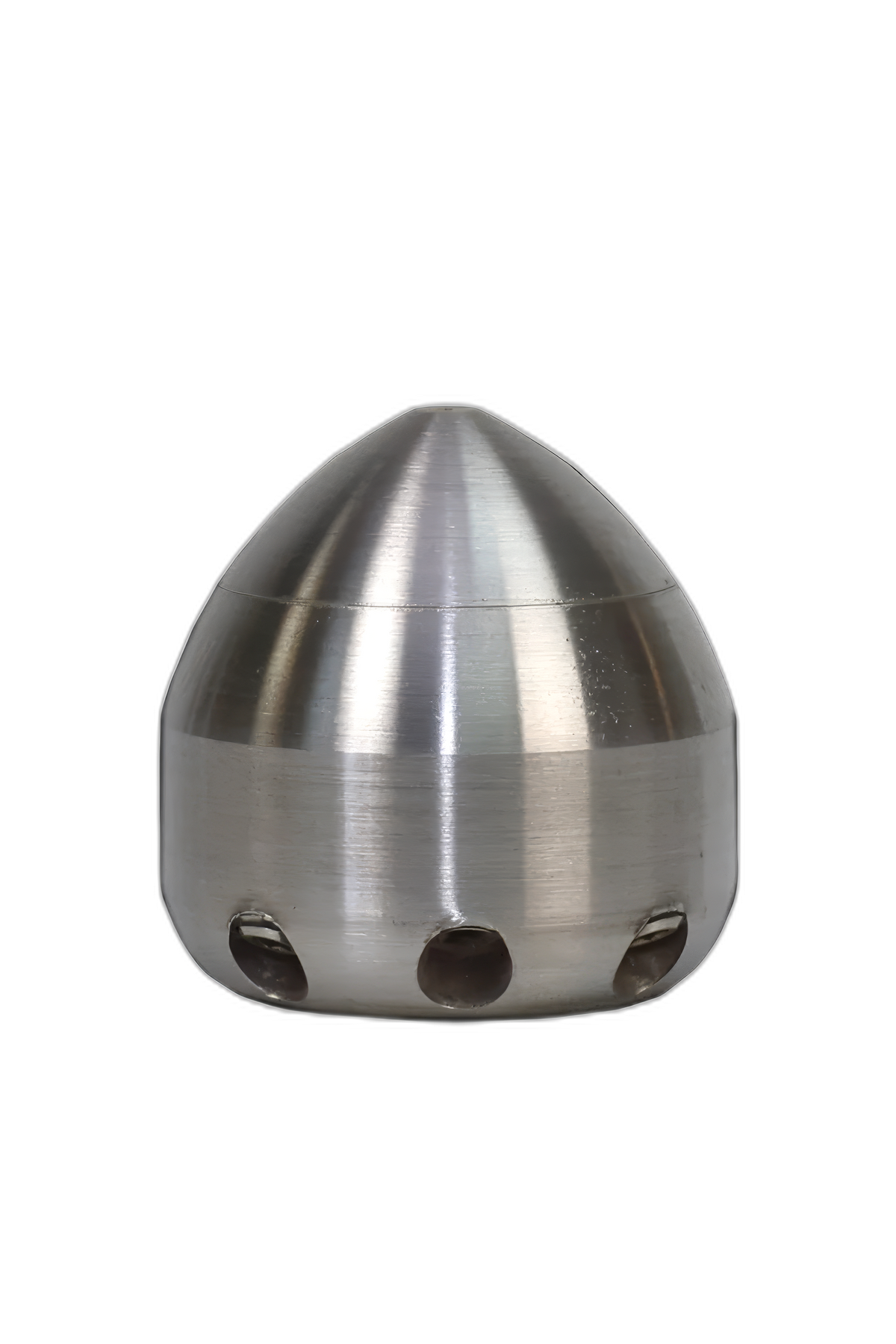
It's 7:05 AM. Your newest tech grabs truck 3 because truck 1 is in the shop. First call is a grease-packed 4" line behind a restaurant — a job he's cleared a dozen times. But truck 3's nozzle box looks nothing like the one he trained on: different brands, a mystery nozzle someone bought at a supply house two years ago, and no finishing nozzle at all. He runs the job with the wrong tool, makes four passes instead of one, and the callback comes Thursday.
Nothing about that story is a skills problem. It's a truck-stock problem — and it's one of the cheapest problems in the trade to fix.
The Hidden Tax of Mixed Truck Stock
Most fleets don't decide to have inconsistent trucks. It just happens: nozzles get bought one emergency at a time, techs develop personal favorites, a truck gets sold and its box gets scattered. A few years in, every truck is a snowflake. Here's what that actually costs:
- Training that doesn't transfer. If every truck is different, you're not training techs on your process — you're training them on truck 2. Move them to truck 4 and half that knowledge is useless.
- Wrong-tool jobs. When the right nozzle isn't on the truck, the job still has to get done — so it gets done with whatever's there. That's how a flusher ends up fighting a hard blockage, and how a one-pass job becomes a four-pass job.
- Restock chaos. Four trucks with four different loadouts means purchasing can't stock spares, can't reorder from one list, and finds out a truck is missing its root nozzle only when the customer's yard is already dug up... by roots.
- No shared playbook. When trucks match, techs can talk to each other: "grease line, 4-inch clay — start with the cleaning nozzle, finish with the rotor." When trucks don't match, every job conversation starts with "well, what do you have on that truck?"
Municipal crews figured this out decades ago — public works fleets spec identical equipment per truck class for exactly these reasons. There's no reason a three-truck plumbing shop shouldn't run the same play.
The Standard Loadout: Four Nozzles, Four Jobs
Watch what a jetting crew actually does across a week and nearly every call breaks into four jobs. That's the whole logic of a standard loadout — one nozzle per job, same box on every truck:
1. The everyday cleaner. Grease, sludge, soap, soft stoppages — the bread-and-butter call. A cleaning nozzle with alternating-angle rear jets scrubs the full pipe wall as it works. This is the nozzle that leads most jobs. KEG's Cleaning Nozzle is Tier Three fluid mechanics — 80%+ of your machine's power actually reaches the pipe wall.
2. The propulsion nozzle. Long runs, belly lines, heavy pulls where the real work is getting hose deep into the line. A tight rear jet pattern drives the hose forward; a forward jet opens the path ahead of it. On 3/8" and 1/2" trucks that's the Traction Nozzle (also Tier Three, 80%+). On 1/4" rigs, the Egg with forward jet does the same work in a smaller package and slides through tight, offset laterals.
3. The blockage opener. The call where the line is stopped — not slow. A wedge-profile nozzle with a drill point and forward jets exists for exactly one purpose: punching through what stops other nozzles. That's the Rambo. It's not an everyday nozzle; it's the one you're very glad is on the truck when you need it.
4. The finisher. Free-spinning, 360° coverage — the last pass before the camera goes in. Tender roots, remaining scale, the film the everyday nozzle left behind. A rotor turns "it's flowing" into "it's clean," and clean camera footage is what sells the customer on the work. One pass with the Rotor and the inspection tells the story for you.
Four nozzles. Every truck. Every tech knows the play on every machine in the yard.
Sizing the Loadout to the Machine
The loadout doesn't change — the size does. Match the box to the truck's hose:
| Truck / machine | Hose | GPM | The box |
|---|---|---|---|
| Cart & portable jetters, pressure-washer rigs | 1/4" | 4–8 | Cleaning, Egg w/ forward jet, Rambo, Rotor |
| Trailer & skid jetters | 3/8" | 4–12 | Cleaning, Traction, Rambo, Rotor |
| Trailer & truck jetters | 1/2" | 12–24 | Cleaning, Traction, Rambo, Rotor |
Mixed fleet? Standardize per truck class — every 3/8" truck matches every other 3/8" truck. Inserts are sized to each machine's GPM, so tell your supplier what each truck runs and the boxes arrive ready to work.
The Economics: Why Standardization Pays for Itself
Fewer passes, faster jobs. Our nozzles pass through on the first try; cheap nozzles take 3–4 passes. Put that on every truck instead of one truck and the whole fleet runs at the fast truck's pace.
One reorder instead of four guesses. When every truck carries the same four nozzles, your reorder is one line: "another set of 3/8" spares." Purchasing stops being archaeology.
Inserts instead of nozzles. KEG nozzles run replaceable inserts — when jets wear, you swap inserts in the field instead of replacing the nozzle. Steel inserts carry a 3-year warranty, ceramic 5-year, and replacement inserts ship same day. A standardized fleet also standardizes its consumables — one insert kit covers every truck in the class.
Kit pricing. We sell the four-nozzle loadout as a single SKU — the Fleet Truck Kit — at a straight 35% off the summed list price (fleet pricing — minimum 2 trucks), which works out meaningfully cheaper than assembling the same box one nozzle at a time. One kit per truck: 1/4", 3/8", 1/2".
Rolling It Out Without Drama
- Audit what's on the trucks today. Photograph every nozzle box. You'll find duplicates, dead weight, and at least one nozzle nobody can identify.
- Pick the standard per truck class and put the same four nozzles on every truck in that class. Keep the oddballs in the shop as backups — don't let them creep back onto trucks.
- Write the play on one card. Which nozzle leads which job type, machine settings, and when to switch. Laminate it, zip-tie it to the box. New hires learn the fleet, not a truck.
- Stock spare inserts in the shop, not on trucks. Same-day insert shipping means the shop bin never needs to be deep.
- Re-audit quarterly. Standardization drifts. A five-minute tailgate check per truck keeps it honest.
FAQ
We already own a mess of nozzles. Do we throw them out?
No — shop backups and loaners. The standard is about what's on the truck, not about scrapping working tools.
What about root jobs — shouldn't trucks carry a chain cutter or a bigger root nozzle?
Specialty work rides on specialty tools, and root-heavy fleets often add a dedicated root nozzle to the box. The four-nozzle standard is the floor every truck shares, not a ceiling. (For heavy mainline root cutting, that's contractor & municipal territory.)
Does this work for a municipal or public-works fleet?
It's how most already operate — and we take purchase orders outright, no credit application for government buyers. Details on the municipal page.
One truck runs a different GPM than the others in its class. Problem?
No — the nozzles are the same; the inserts are sized to each machine. Note each truck's GPM when ordering and each box arrives set up for its machine.
Building out a single truck instead? Start with the jetter truck equipment list and setup guide. Already running KEG nozzles? Change the inserts, not the nozzle.
Need the right nozzle for the job?
Talk to someone who runs this gear, or shop our full lineup of pro-grade jetting nozzles.